

Mindfulness Pillar
Stress, HRV, mood and mindfulness as recovery signals
Learn how stress, mood, HRV, coffee and calm sessions can help users understand recovery patterns.
Key Takeaways
- Recovery is not only sleep. Stress, mood, stimulants and calm sessions can change how sustainable a plan feels.
- HRV varies widely by person, so Agefully compares it against a personal baseline when Apple Health data is available.
- The mindfulness pillar turns subjective check-ins into a pattern users can act on.
Why stress belongs in a healthy-aging app
The American Heart Association includes stress management, mental wellbeing and sleep as part of a broader healthy lifestyle. Agefully mirrors that idea by keeping mood and calm sessions visible.
The app does not diagnose stress or mental health conditions. It helps users notice whether daily routines are sustainable and whether recovery habits are getting skipped.
How HRV fits in
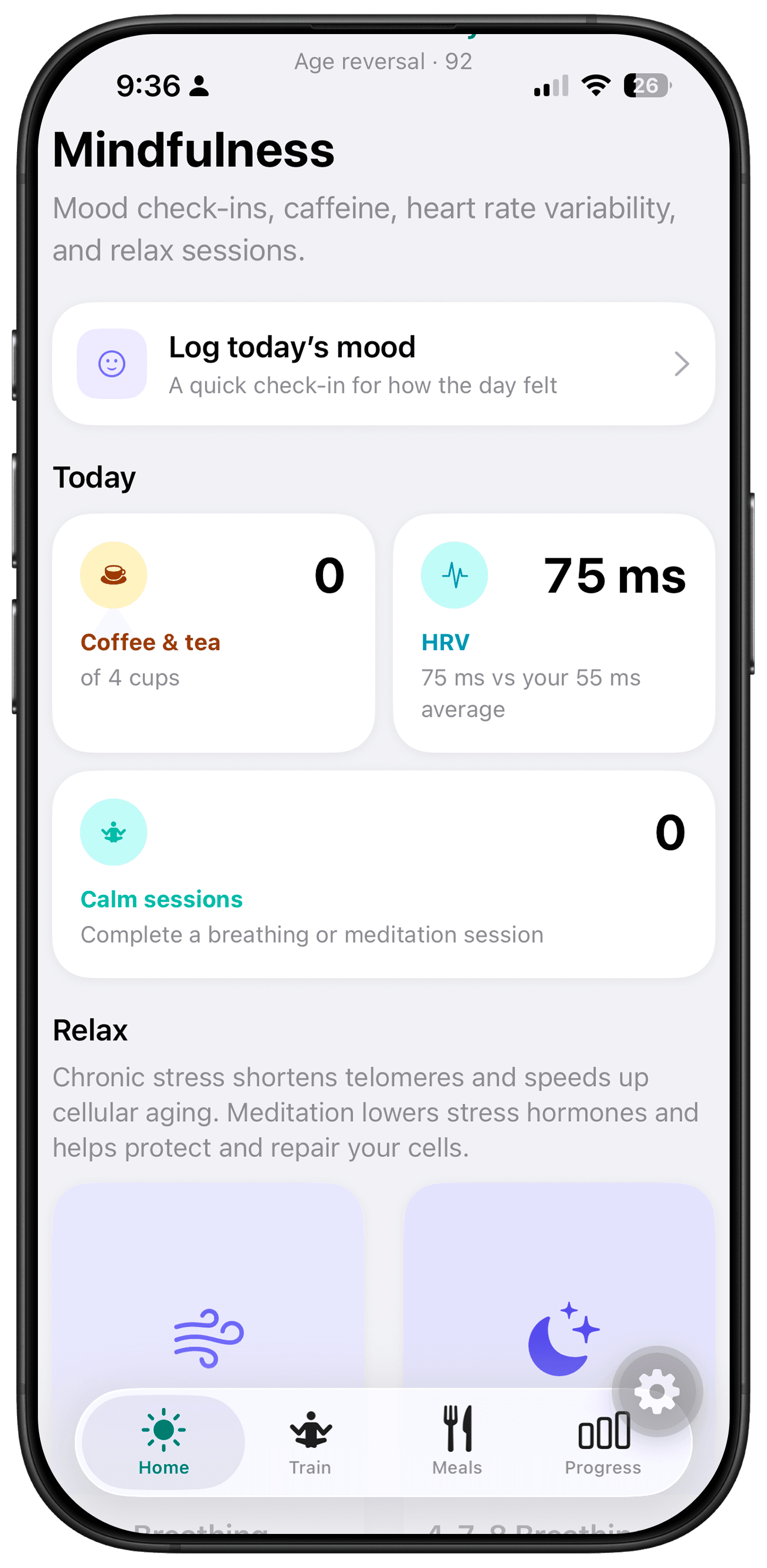
Heart rate variability can reflect nervous-system state, but it is highly individual. Agefully's scoring compares HRV to the user's own recent baseline rather than using a universal ranking.
Coffee and calm-session logs add practical context because they often explain why recovery signals move from day to day.
What users can do this week
Log mood with a quick tap, notice coffee timing, and complete a short breathing, meditation or calm-walk session when the day starts to run hot.
The point is not perfect calm. It is a visible feedback loop that helps users protect recovery before the day is over.
How Agefully Helps
Turn the science into a daily plan.
- Tracks mood, coffee, HRV from Apple Health and completed relaxation sessions.
- Keeps mindfulness as one of the five Aging Well Index pillars.
- Frames recovery as practical behavior, not a vague wellness idea.