

Sleep Pillar
Sleep stages, recovery and why consistency matters
Understand REM, deep sleep, sleep consistency and how Agefully turns sleep into a practical recovery signal.
Key Takeaways
- Sleep cycles through REM and non-REM stages several times a night.
- Deep sleep tends to appear more earlier in the night, while REM periods often lengthen later.
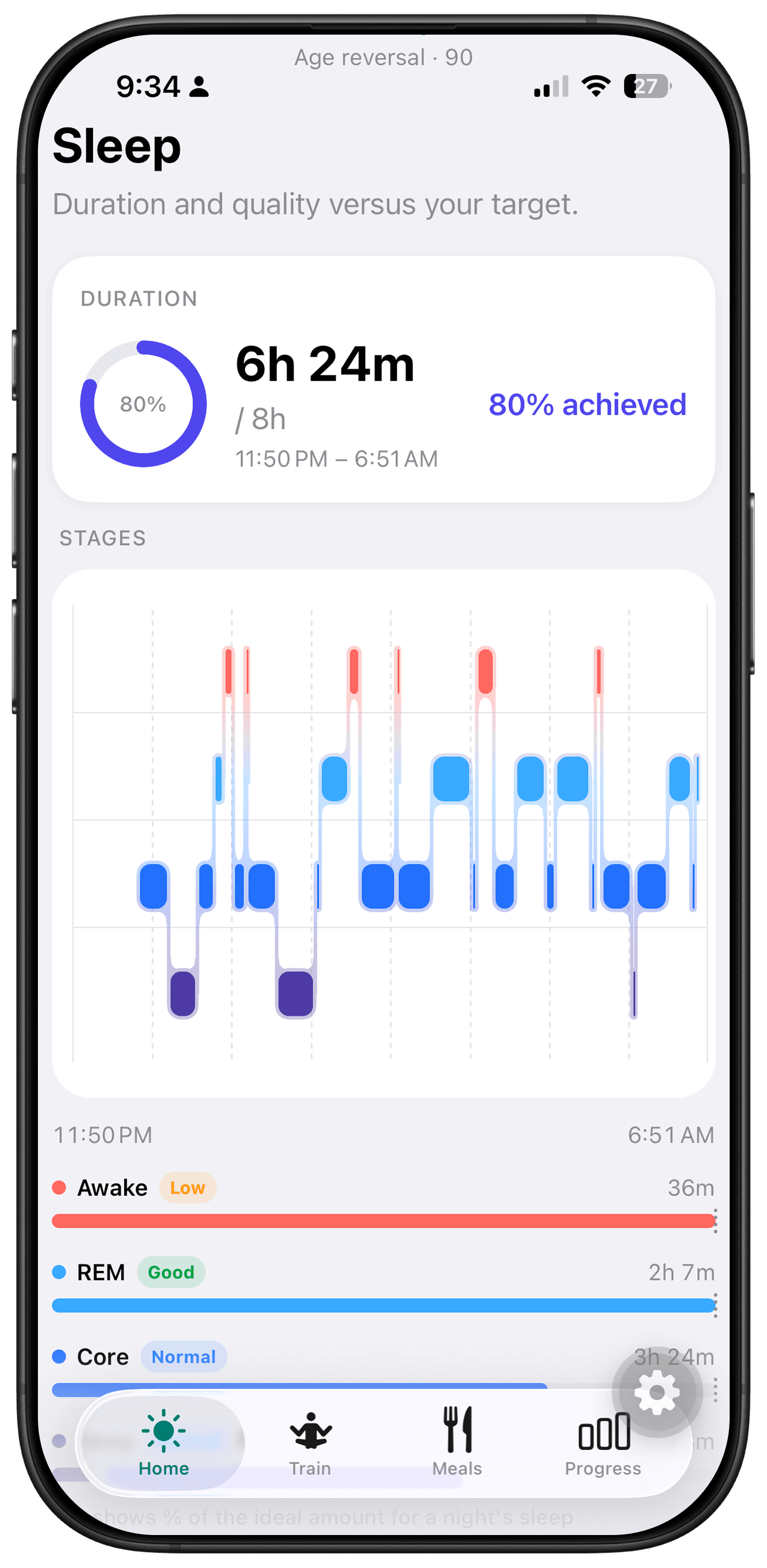
- Agefully tracks sleep duration, quality, consistency and Apple Health stages when available.
What sleep stages mean
NIH sleep resources describe two major sleep phases: REM and non-REM. Non-REM includes lighter sleep and deep sleep, while REM sleep is associated with active brain patterns and dreaming.
A typical night includes repeated cycles. The exact mix changes across the night and across a lifetime, so Agefully treats stage data as context rather than a rigid target.
Why consistency matters
Sleep health is not only total hours. Timing, regularity, quality and daytime recovery all matter. The American Heart Association added sleep to Life's Essential 8 because sleep is tied to cardiovascular health.
Agefully keeps sleep in the same daily plan as food, movement, skin and mindfulness so recovery is not separated from the habits that influence it.
What users can do this week
Start with a realistic sleep window and make the wake time easier to repeat. Then look at duration and quality patterns instead of overreacting to one night.
If Apple Health has compatible sleep-stage data, Agefully can import it; if not, simple duration and quality logs still make the recovery trend visible.
How Agefully Helps
Turn the science into a daily plan.
- Tracks sleep duration and quality from manual logs.
- Imports sleep stages and sleep timelines from compatible Apple Health sources.
- Shows sleep as its own pillar and connects it to the daily plan.